Document Type : Original Article
Authors
1
Associate Professor of Thoracic Surgery, Department of Cardiovascular Surgery, School of Medicine, Tabriz University of Medical Sciences, Tabriz, Iran
2
Assistant Professor of Radiotherapy, Department of Radiology, School of Medicine, Tabriz University of Medical Sciences, , Tabriz, Iran
3
Assistant Professor of Thoracic Surgery, Department of Cardiovascular Surgery, School of Medicine, Tabriz University of Medical Sciences, Tabriz, Iran
10.5281/zenodo.24188148
Abstract
Introduction: Regional lymph node involvement remains a critical prognostic indicator in breast cancer following mastectomy. Although various clinicopathological factors influence early disease progression, their short-term impacts require precise quantification. Therefore, this study evaluated the clinicopathological determinants of regional lymph node involvement and assessed its independent prognostic impact on disease-free survival and mortality within a one-year follow-up period.
Material and methods: This ten-year retrospective descriptive cross-sectional study evaluated 314 patients selected via convenience sampling from 1,700 women who underwent mastectomy at Shahid Madani Hospital, Tabriz. Clinicopathological characteristics, regional lymph node status, and one-year outcomes were extracted from medical records. Statistical evaluations were performed using standard tests, following ethical approval from Tabriz University of Medical Sciences.
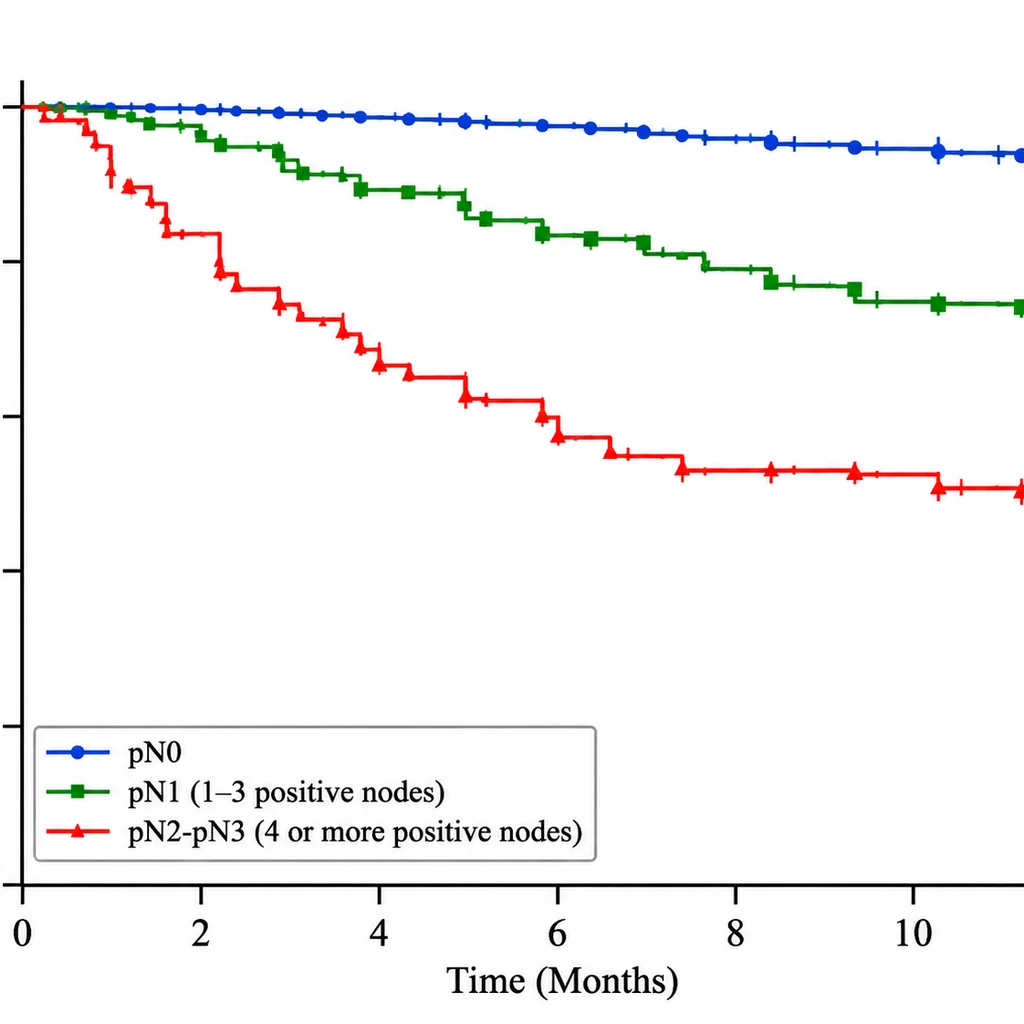
Results: Multivariable analyses revealed that lymphovascular invasion (adjusted OR=2.89, P<0.001), advanced T3/T4 tumor size (adjusted OR=3.42, P<0.001), and grade III histology (adjusted OR=2.45, P=0.016) independently predict nodal involvement, while extensive nodal spread (pN2-pN3) markedly increased one-year recurrence hazard (adjusted HR=12.15, P<0.001) alongside significantly divergent survival curves (log-rank P<0.001).
Conclusion: Regional lymph node metastasis, lymphovascular invasion, and advanced tumor stage are critical determinants of early recurrence and survival following mastectomy. Identifying these high-risk clinicopathological predictors early enables tailored therapeutic strategies and intensified post-surgical surveillance to improve patient prognosis and clinical outcomes.
Graphical Abstract
Keywords
Subjects