Document Type : Original Article
Authors
1
Assistant Professor of Thoracic Surgery, Department of Cardiovascular Surgery, School of Medicine, Tabriz University of Medical Sciences, Tabriz, Iran
2
Assistant Professor of Radiotherapy, Department of Radiology, School of Medicine, Tabriz University of Medical Sciences, , Tabriz, Iran
3
Associate Professor of Thoracic Surgery, Department of Cardiovascular Surgery, School of Medicine, Tabriz University of Medical Sciences, Tabriz, Iran
10.5281/zenodo.24192398
Abstract
Introduction: Although post-mastectomy radiotherapy is essential for local control, its impact on late-onset muscle deterioration remains unclear. Confounding treatment exposures and localized tissue changes complicate post-treatment functional assessments. Therefore, this study aimed to evaluate sarcopenia incidence and associated risk factors at 3-month and 6-month post-radiotherapy intervals in post-mastectomy patients.
Material and methods: This cross-sectional study at Shahid Madani Hospital evaluated 125 post-mastectomy patients selected via convenience sampling (Cochran’s formula). Participants assessed at three and six months post-radiotherapy underwent EWGSOP2-based evaluations for sarcopenia. Demographic, oncologic, and clinical variables were recorded, and data were analyzed using descriptive statistics, group comparisons, and regression models following ethical approval.
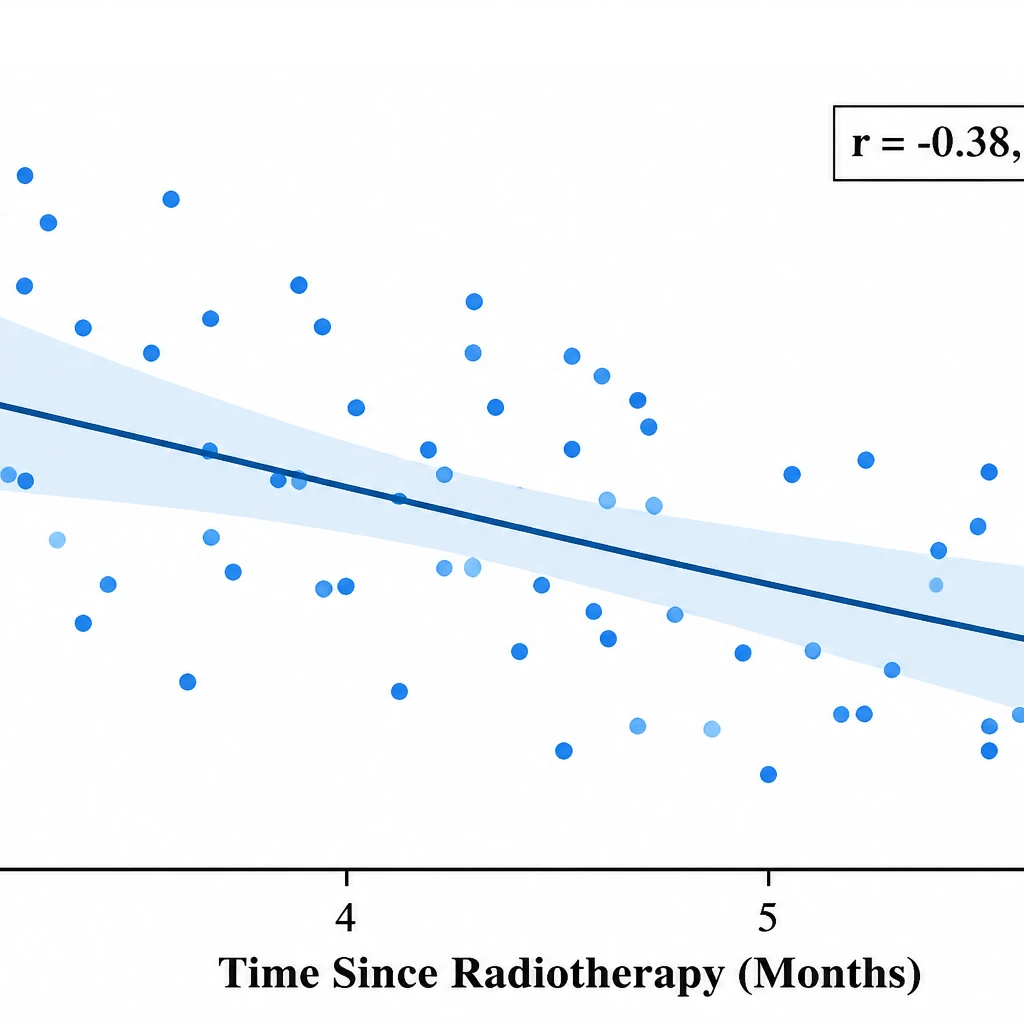
Results: Post-mastectomy radiotherapy induced significant muscle depletion, with overall sarcopenia incidence rising from 32.3% at 3 months to 46.7% at 6 months (P=0.095). Appendicular skeletal muscle index demonstrated a significant inverse correlation with time elapsed since radiotherapy (r=−0.38, P<0.001). Multivariable analysis confirmed advanced age (≥6 years: adjusted OR=2.85, P=0.008), 6-month interval (adjusted OR=2.14, P=0.044), and nodal irradiation (adjusted OR=2.05, P=0.047) as independent predictors.
Conclusion: Late-onset sarcopenia is a clinically significant complication following post-mastectomy radiotherapy, exhibiting progressive deterioration in muscle mass and strength over time. Extended radiation fields encompassing regional lymph nodes, advanced age, and prolonged post-treatment intervals significantly exacerbate muscle depletion. Early screening and targeted nutritional or rehabilitative interventions are essential for mitigating functional decline in high-risk breast cancer survivors.
Graphical Abstract
Keywords
Subjects