Subjects = Dentist Research
Number of Articles: 3
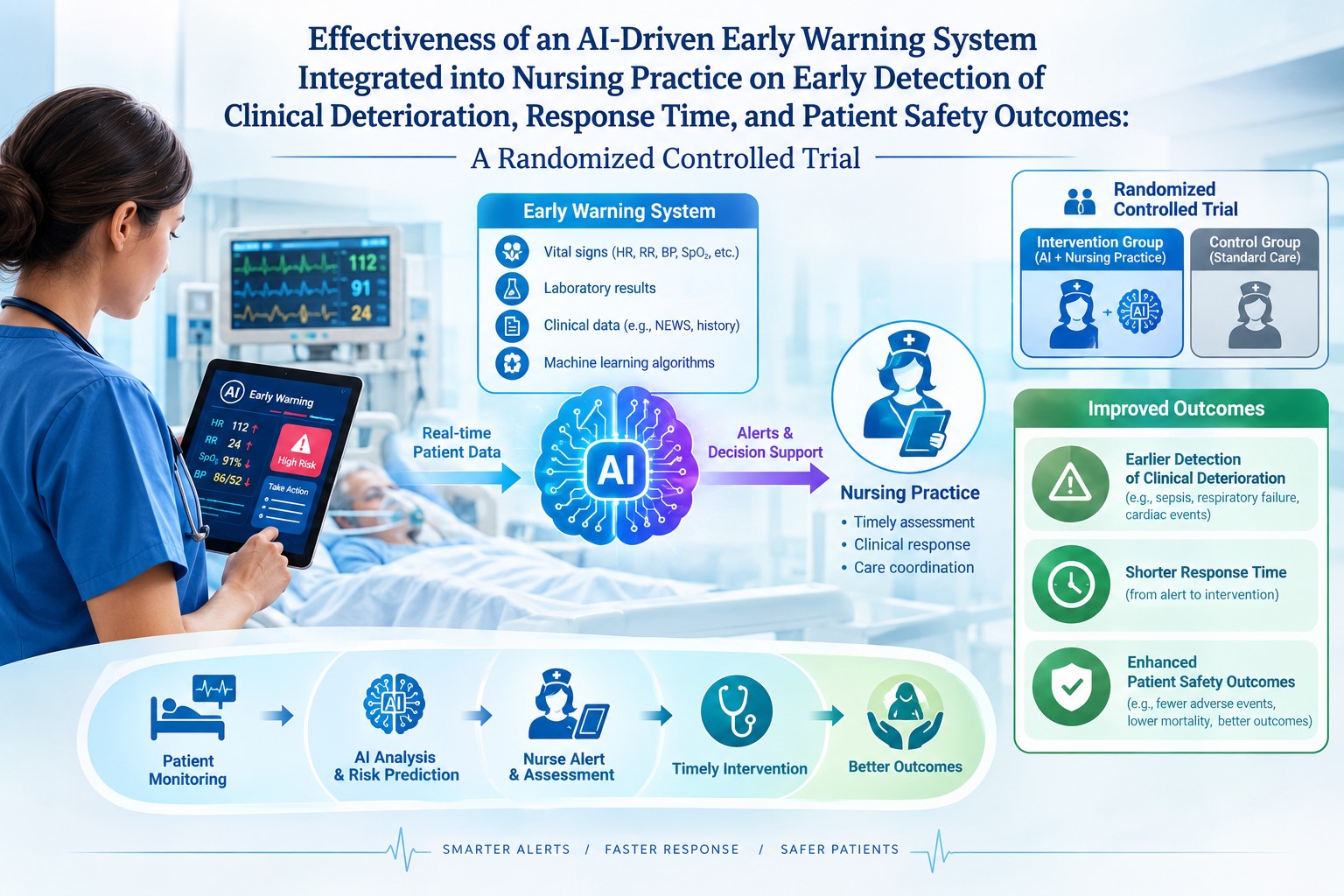
Effectiveness of an AI-Driven Early Warning System Integrated into Nursing Practice on Early Detection of Clinical Deterioration, Response Time, and Patient Safety Outcomes: A Randomized Controlled Trial

Effectiveness of an AI-Driven Early Warning System Integrated into Nursing Practice on Early Detection of Clinical Deterioration, Response Time, and Patient Safety Outcomes: A Randomized Controlled Trial

Volume 3, Issue 1, January and February 2027, Pages 76-91

https://doi.org/10.5281/zenodo.23161499

Elham Mohammadzadeh

Abstract Background: Clinical deterioration in hospitalized patients often precedes adverse events such as cardiac arrest, unplanned intensive care unit (ICU) admission, and mortality. While traditional early warning systems (EWS) based on vital signs have improved detection, their predictive accuracy and integration into nursing workflow remain suboptimal. Artificial intelligence (AI)-driven systems leveraging nursing surveillance data may enhance early detection and response.

Objective: To evaluate the effectiveness of an AI-driven early warning system integrated into nursing practice on early detection of clinical deterioration, nursing response time, and patient safety outcomes in adult medical-surgical wards.

Methods: A pragmatic randomized controlled trial conducted across 12 medical-surgical units in two tertiary hospitals. Adult patients (N = 4,286) were randomized to either the AI-driven EWS (intervention, n = 2,143) or standard EWS care (control, n = 2,143). The AI system analyzed nursing documentation patterns and vital signs in real time, generating risk scores displayed within the electronic health record. Primary outcomes included time to clinical deterioration detection, nursing response time to alerts, and composite patient safety outcomes (in-hospital mortality, unplanned ICU transfer, and cardiac arrest). Data were analyzed using intention-to-treat principles with mixed-effects models.

Results: The AI-driven EWS significantly reduced time to deterioration detection (median 2.1 vs. 4.8 hours; p < 0.001) and nursing response time (median 18 vs. 42 minutes; p < 0.001). The composite patient safety outcome occurred in 11.2% of intervention patients versus 16.8% of controls (adjusted odds ratio 0.64, 95% CI 0.53–0.78; p < 0.001). Unplanned ICU transfers were higher in the intervention group (24.9% increase; p = 0.001), suggesting appropriate escalation.

Conclusion: AI-driven EWS integrated into nursing practice substantially improved early detection, response time, and patient safety outcomes. These findings support implementation of AI-enhanced surveillance systems in acute care settings.
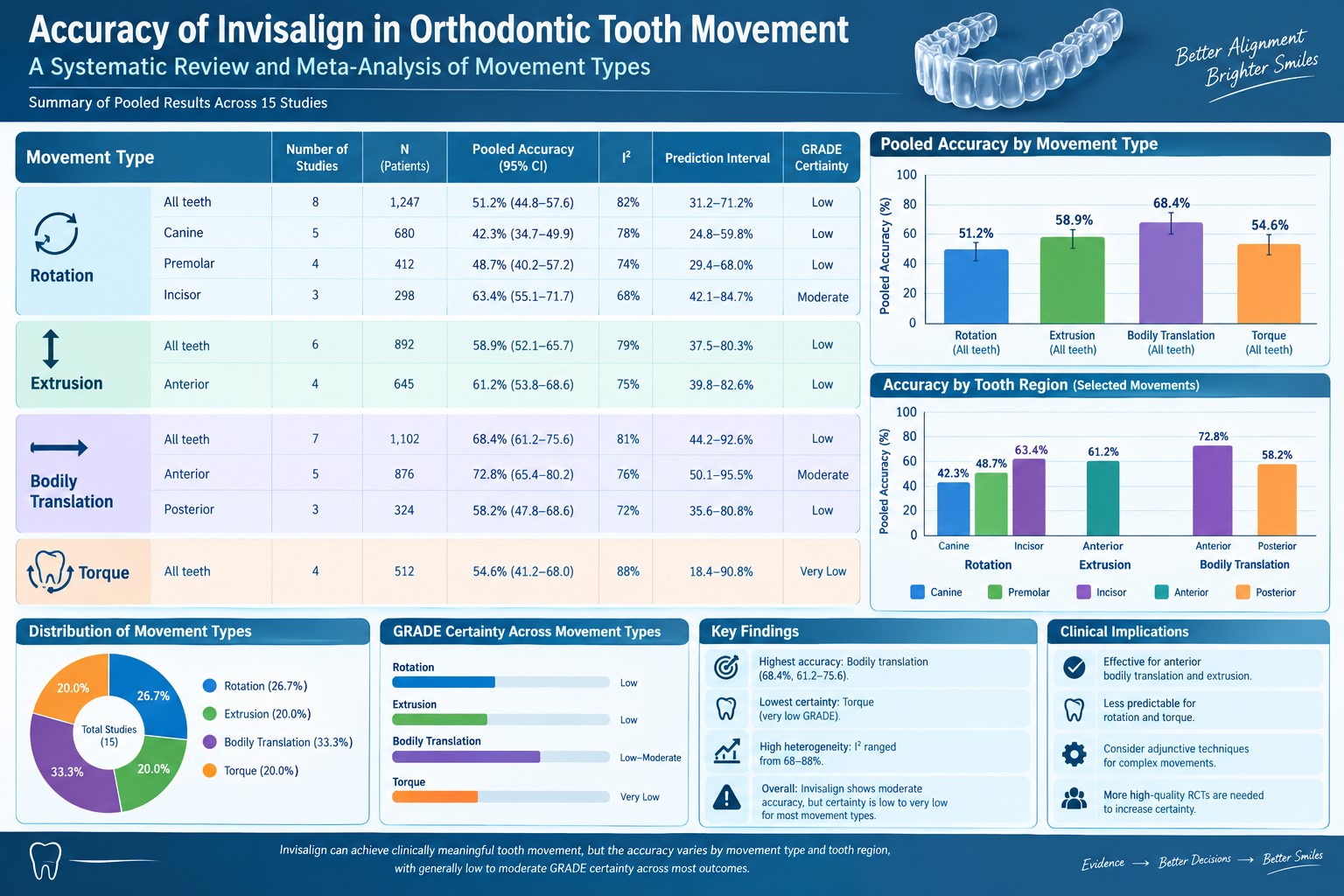
Predictability of Tooth Movement with Clear Aligner Therapy: A Systematic Review and Meta-Analysis of Clinical Outcomes

Predictability of Tooth Movement with Clear Aligner Therapy: A Systematic Review and Meta-Analysis of Clinical Outcomes

Volume 3, Issue 1, January and February 2027, Pages 123-141

https://doi.org/10.22034/mphrj.2026.604371.1121

Dorsa Rahi, Dorrin Rahi

Abstract Background: Clear aligner therapy (CAT) has become increasingly popular as an aesthetic alternative to fixed appliances, yet its ability to achieve predicted tooth movement remains debated. The predictability of CAT—the agreement between ClinCheck-predicted and clinically achieved tooth positions—varies substantially across movement types and tooth types.

Objective:

This systematic review and meta-analysis aimed to quantify the predictability of tooth movement with clear aligners across different movement types (rotation, extrusion, bodily translation, and torque) and to compare treatment outcomes between CAT and fixed appliances. Methods: PubMed, Embase, Scopus, Cochrane Library, and Web of Science searched from inception to January 2026. Eligible studies compared predicted versus achieved tooth movement with clear aligners and reported quantitative accuracy outcomes. Random-effects meta-analyses pooled mean differences and accuracy percentages. Risk of bias was assessed using ROBINS-I and RoB 2. Certainty of evidence evaluated using GRADE.

Results: Twenty-seven studies (N = 2,847 patients) were included. Overall predictability varied significantly by movement type. Rotation was the least predictable movement (pooled accuracy 51.2%; 95% CI 44.8–57.6%), with canine rotation particularly unreliable (42.3%). Extrusion showed moderate predictability (58.9%; 95% CI 52.1–65.7%). Bodily translation demonstrated higher accuracy (68.4%; 95% CI 61.2–75.6%), though posterior movements were less predictable than anterior movements. Torque control showed substantial variability (prediction interval 31.2–72.8%). No significant difference was found in overall American Board of Orthodontics Objective Grading System scores between CAT and fixed appliances (mean difference 1.87; 95% CI −2.32 to 6.06; p = 0.38), though heterogeneity was high (I² = 90%).

Conclusion: Clear aligner therapy demonstrates movement-specific predictability, with rotation being least predictable and anterior bodily movement most predictable. Clinicians should consider overcorrection strategies for rotation and extrusion and anticipate refinement needs. The certainty of evidence is low to moderate, highlighting the need for standardized prospective studies.

Minimally Invasive Techniques in Modern Restorative Dentistry

Minimally Invasive Techniques in Modern Restorative Dentistry

Volume 2, Issue 3, Spring 2026, Pages 177-188

https://doi.org/10.22034/mphrj.2026.585032.1085

Martin Zbuzant

Abstract Minimally Invasive Dentistry (MID) represents a paradigm shift from the traditional "extension for prevention" philosophy, originally proposed by G.V. Black, toward a more biological and conservative approach. This article explores the core principles of MID, focusing on the integration of advanced diagnostic tools, adhesive restorative materials, and precision surgical techniques that prioritize the preservation of healthy tooth structure. The abstract summarizes the transition from macro-mechanical retention to micro-mechanical and chemical bonding, which has redefined the longevity of dental restorations. By utilizing tools such as air abrasion, laser technology (Er:YAG), and bioactive materials, clinicians can now perform ultra-conservative preparations that minimize pulp irritation and structural weakening. The review also evaluates the role of remineralization therapies and the importance of early detection using fluorescence-based diagnostics. Findings suggest that MID not only enhances the mechanical integrity of the tooth but also significantly improves patient comfort and long-term oral health outcomes. This comprehensive study analyzes clinical data comparing traditional methods with MI techniques, highlighting success rates, marginal integrity, and patient satisfaction. The evidence underscores that the future of restorative dentistry lies in biomimetic principles and the continuous monitoring of lesions rather than immediate surgical intervention. Ultimately, this paper serves as a clinical guide for implementing MI strategies in daily practice, ensuring that the biological cost of dental treatment is kept to an absolute minimum while maximizing functional and aesthetic results.